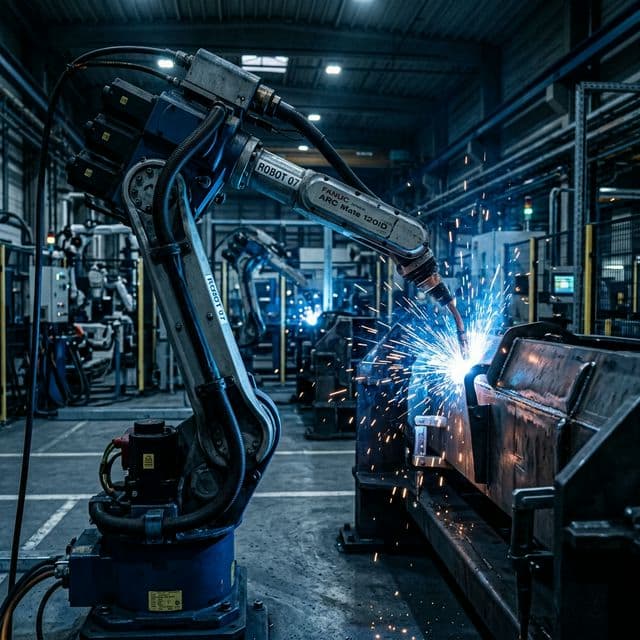
The manufacturing landscape is evolving at an unprecedented pace, driven largely by advancements in artificial intelligence and machine learning. In the realm of robotic welding, these technologies are no longer just buzzwords; they are actively reshaping how facilities operate.
Precision and Speed Unlocked
Traditionally, robotic welders required extensive programming for every minor deviation in part dimensions. Today, vision systems coupled with AI algorithms allow robots to adjust their paths in real-time. This means fewer defects, drastically reduced scrap rates, and an overall increase in throughput.
The Human-Robot Synergy
Contrary to the belief that robots will entirely replace human welders, the future points toward collaborative environments. Skilled human operators are essential for overseeing complex cells, maintaining equipment, and handling non-standard tasks that still require human intuition and adaptability.
At Nestbotics, we've seen first-hand how integrating smart welding solutions transforms a struggling production line into a highly efficient, predictable operation.
As we move forward, the barrier to entry for intelligent welding automation will continue to lower, allowing even small-to-medium manufacturers to reap the benefits of this next-generation technology. Is your facility ready for the leap?